The world of subtitling has changed fundamentally over the decades. What began with heated stamps and chemical processes was revolutionised by laser technology. Today we work entirely digitally – but the road here was long and fascinating. This page shows how a 35mm film used to be subtitled: from the arrival of the print to its dispatch to the cinema.
01 – History
Three methods, one goal.
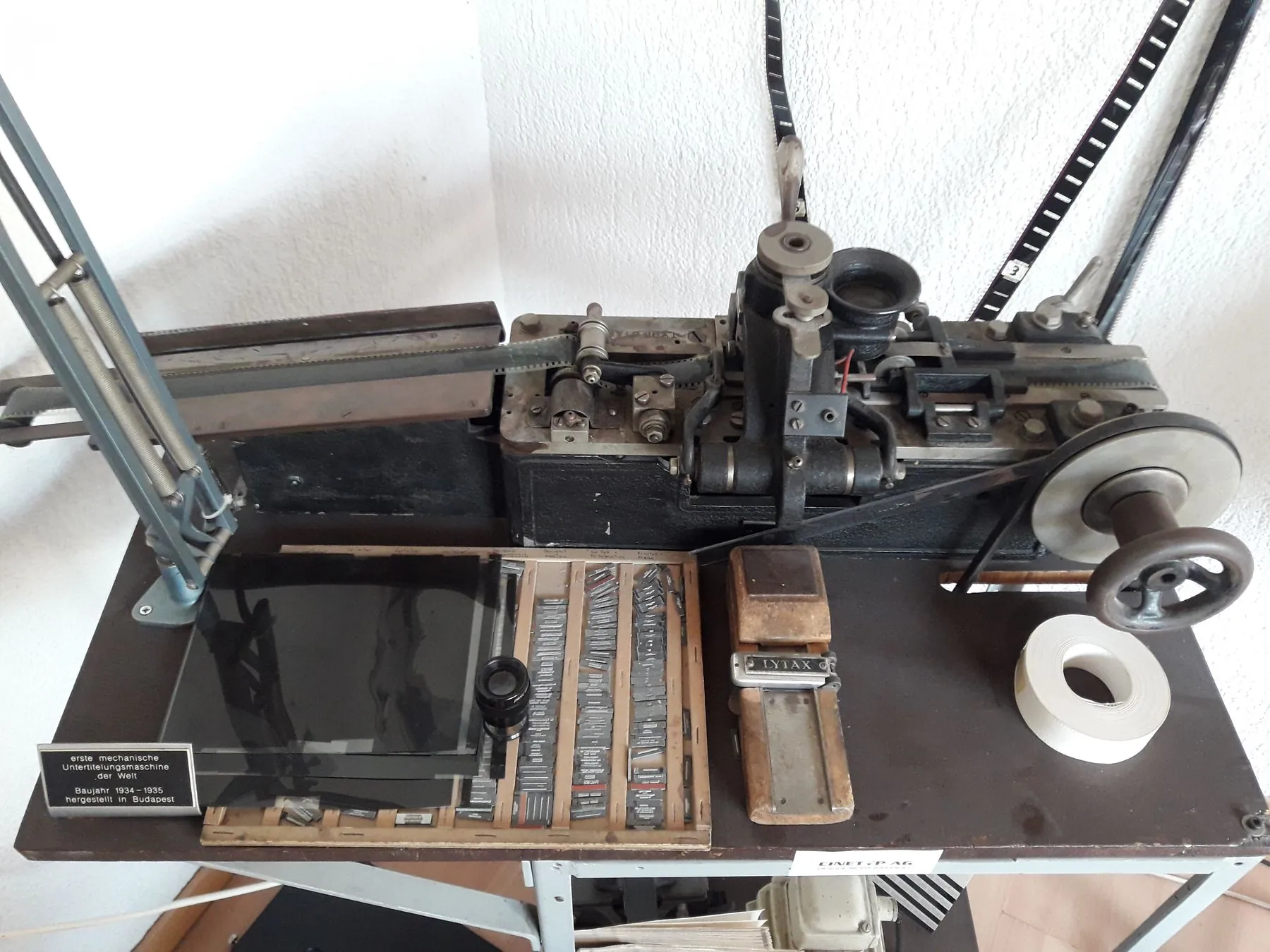
Hot stamp
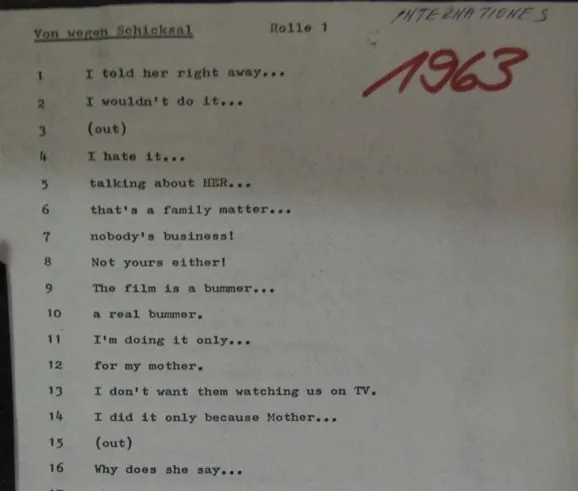
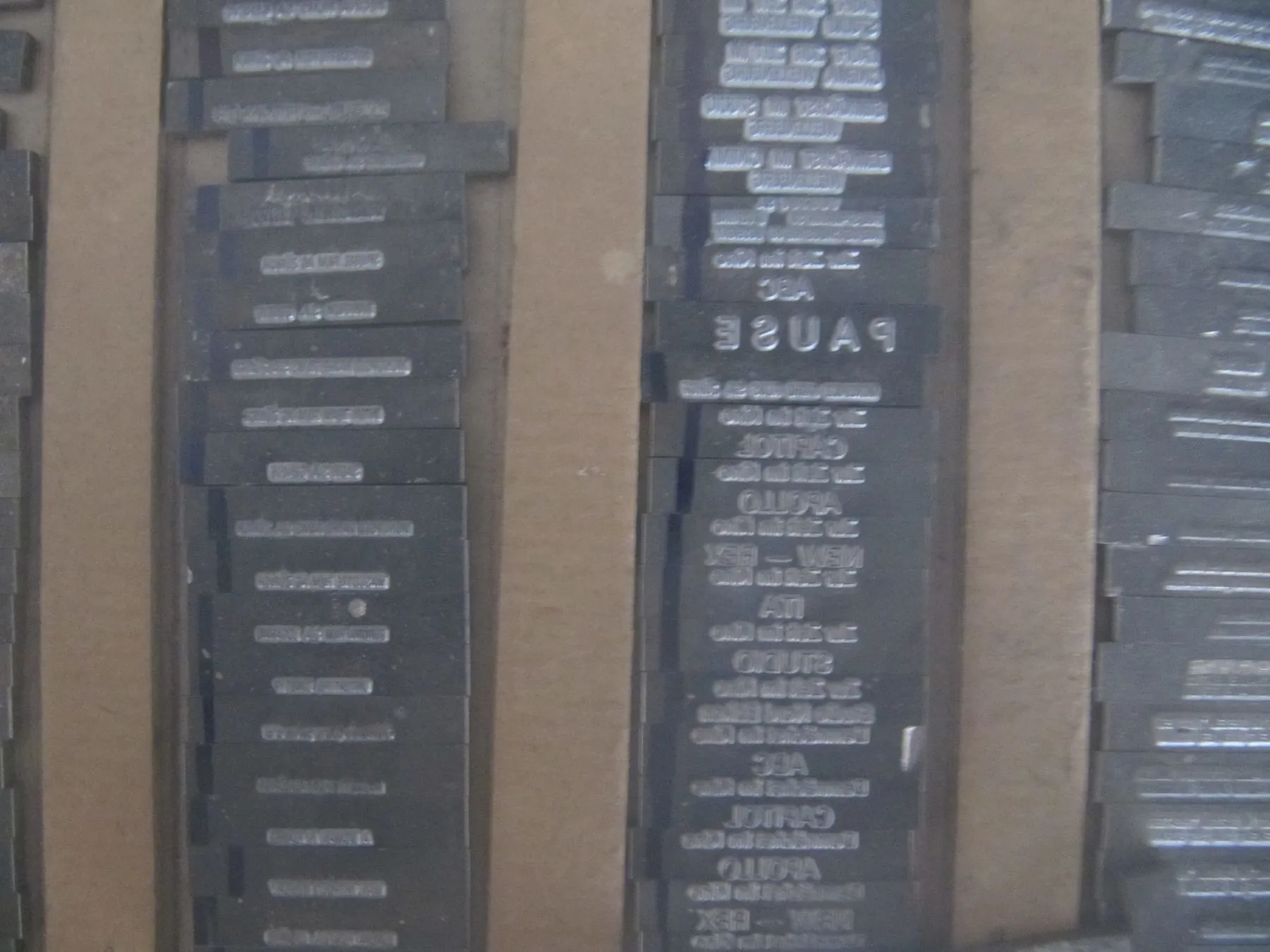
In the early days of subtitling, small stamps were made, heated and pressed into the film. Both the emulsion and the base were deformed, producing yellow subtitles. The only aid was the title list. Staff had to change the stamp by hand and position it on the film using a counter. Old title lists are still stacked in our archives today.
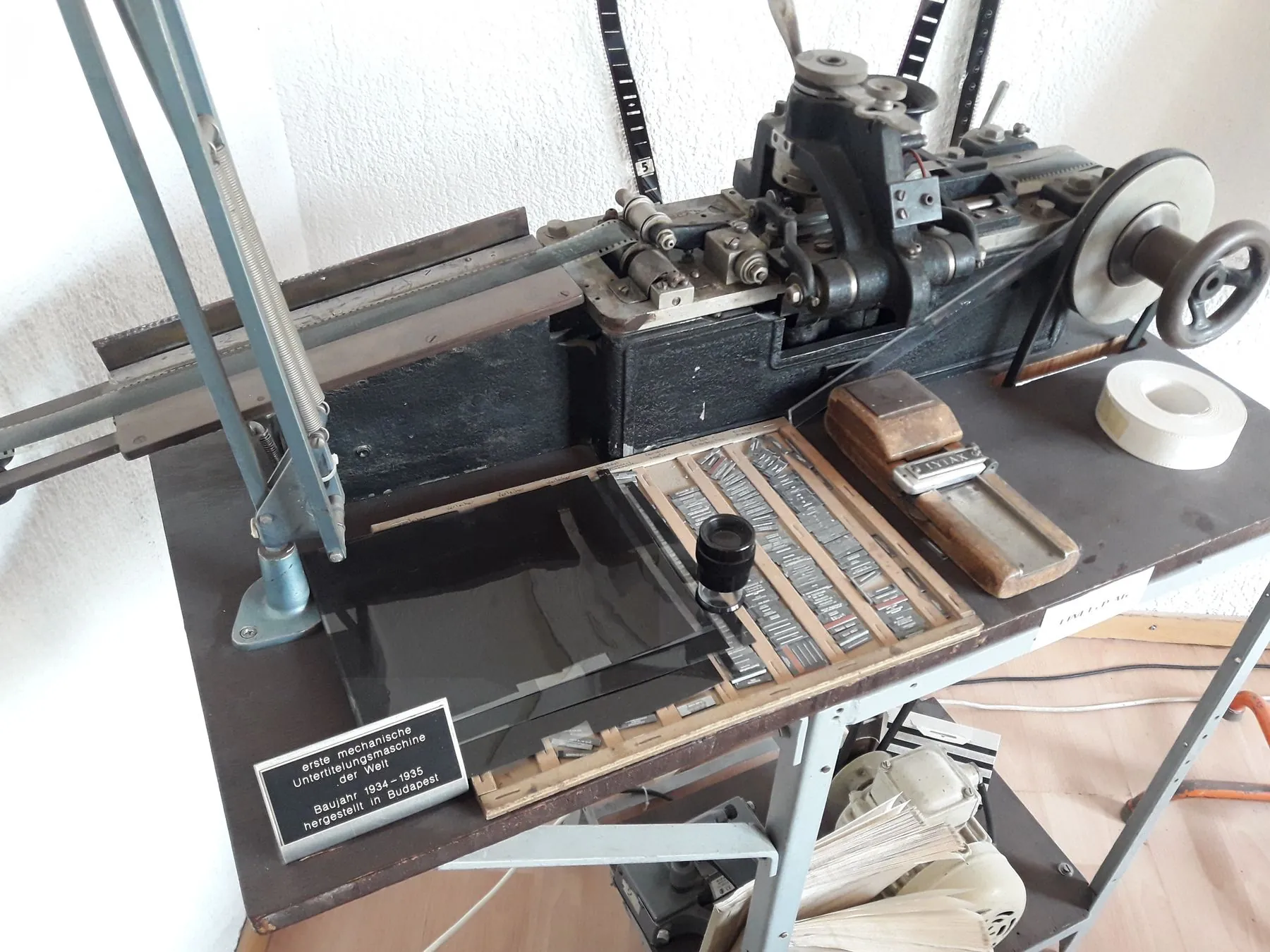
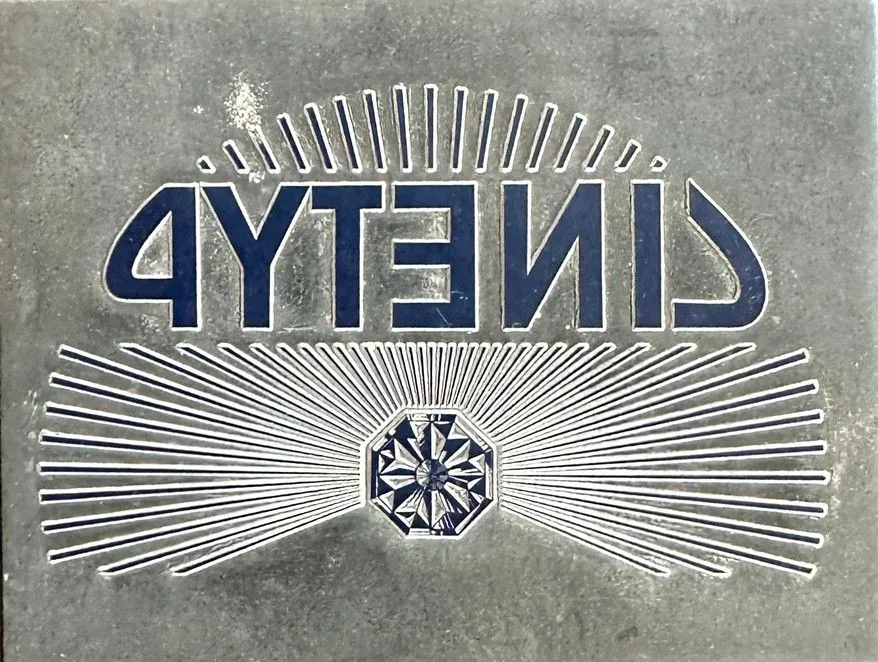
Stamp for chemical subtitling
Chemical subtitling
The stamp system was further developed: the film was now coated with paraffin, and cold stamps pressed the letters mechanically into the paraffin, so the film was no longer deformed. The film was then drawn through a bleach bath. Wherever the stamp had displaced the paraffin, the bleach etched the emulsion away from the base – and the subtitle became visible in the image.
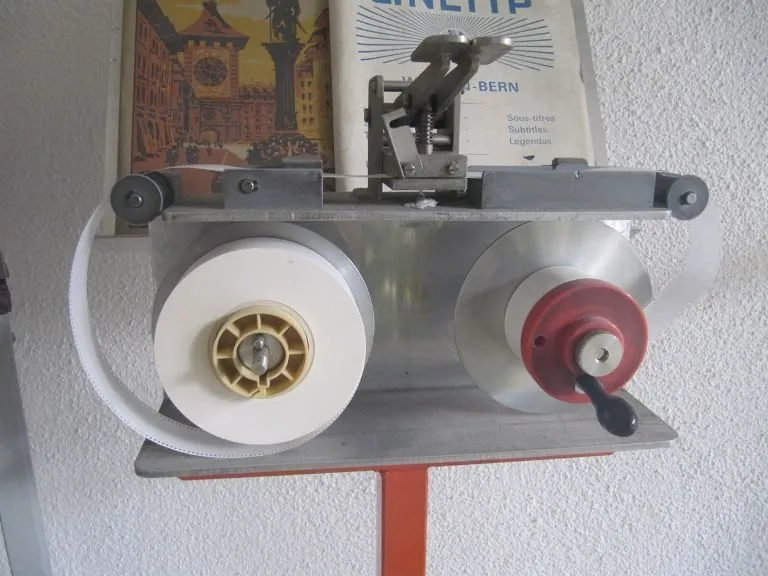
Afterwards the paraffin had to be removed again, a process involving many individual steps. The precision of the letters no longer meets today's standards, but the method produced brilliant white titles. It was already partly automated: a paper strip with start and end holes ran alongside the film, and the stamps were changed hydraulically. The title list was used to check the text.
Punched tape for the chemical process
Laser subtitling
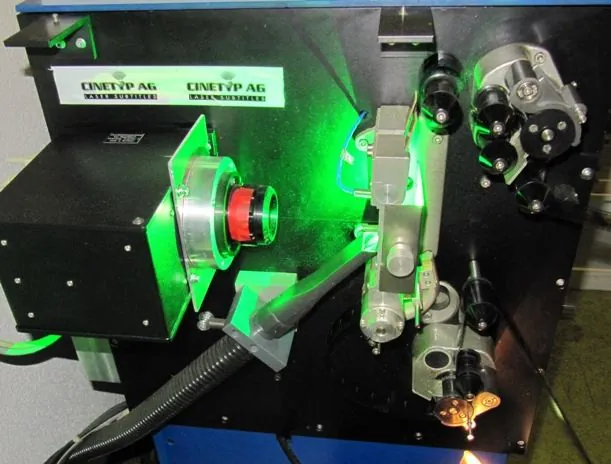
In 1991, Cinetyp introduced laser subtitling. The laser beam burns the emulsion off the film; the resulting subtitle then has to be finished. The switch of film base from triacetate to polyester, however, brought many disadvantages: the laser burned the base, and subtitles turned grey and unsteady. This could not be solved by the machines alone – over time, the polyester had to be adapted to laser subtitling many times. In return, the laser greatly improved the character precision that stamps had never achieved.
1991Cinetyp introduces laser subtitling
02 – Goods in
Measuring.
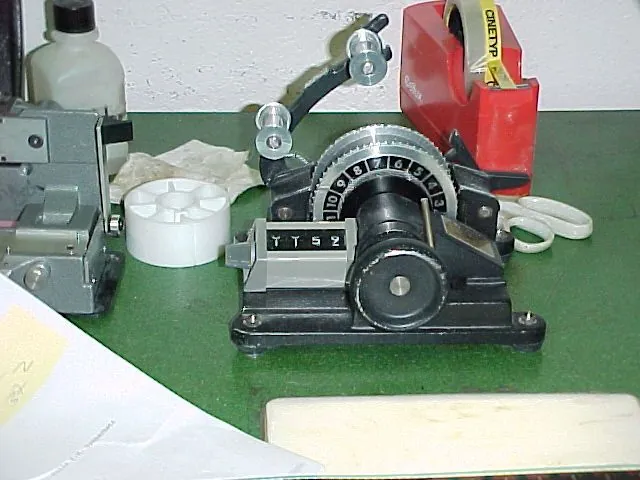
On arrival, every film reel is rewound and measured by its number of frames. The first print received is the master: translation and spotting are based on its length and positions. Any deviation between a subsequent print and the master must be detected – otherwise the subtitle ends up in the wrong place and the text no longer matches the scene.
Rewinding and measuring table
Measuring starts from the first frame of each reel. Three checkpoints are used within a reel – each one a scene cut that is easy to recognise visually. If a cut is not in exactly the same place, the length does not match. Every single frame is counted.
24frames per second – the 35mm film standard
If prints or trailers have the correct length, they are wound up – reel by reel, trailer by trailer. It is essential that the start is marked correctly so that the subtitling machine begins at the right frame. An incorrect measurement or careless handling causes irreparable damage to the print immediately.
03 – Language
Translation & spotting.
Spotting means placing the subtitle: it determines when and for how long a subtitle appears on screen. If a title is to be visible for one second, 24 frames must carry exactly the same text.
Whenever possible, translations are made together with the original film to avoid misinterpretation. Most cinema subtitles in Switzerland have two lines: German on top, French below.
41characters per line – all the space there was on 35mm film
If a line uses all 41 characters, the subtitle has to stay on screen for about 1.5 to 2 seconds so that it can be read and understood. An actor can say a great deal in two seconds – so a word-for-word translation is impossible. This kind of translation differs greatly from conventional translation and requires excellent command of both the foreign and the native language.
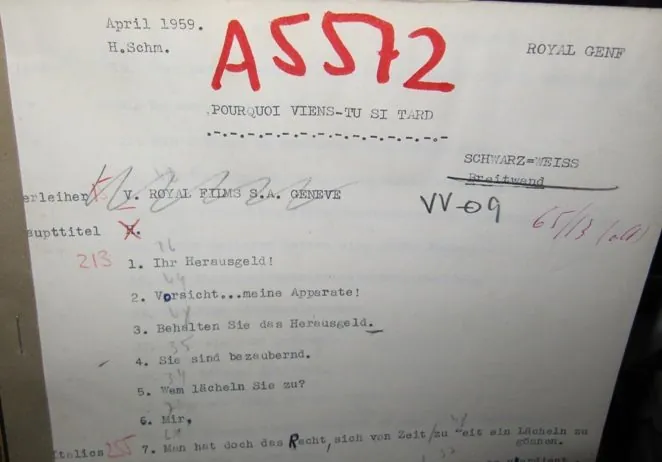
Title lists from our archive
We always translate from the foreign language into the native language: anyone translating from English into French is a native French speaker. All workstations were equipped with CINTISCH, our in-house software for translating and spotting both 35mm and digital films.
04 – Machine
Subtitling.
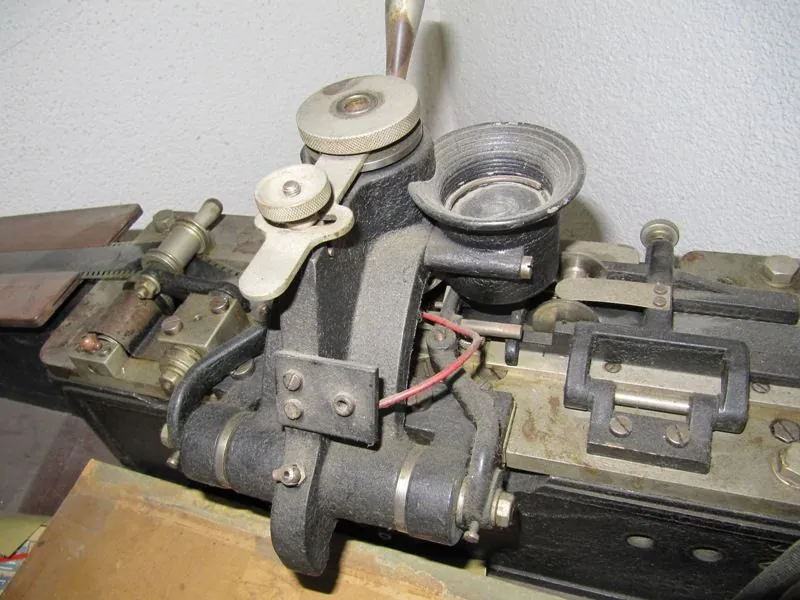
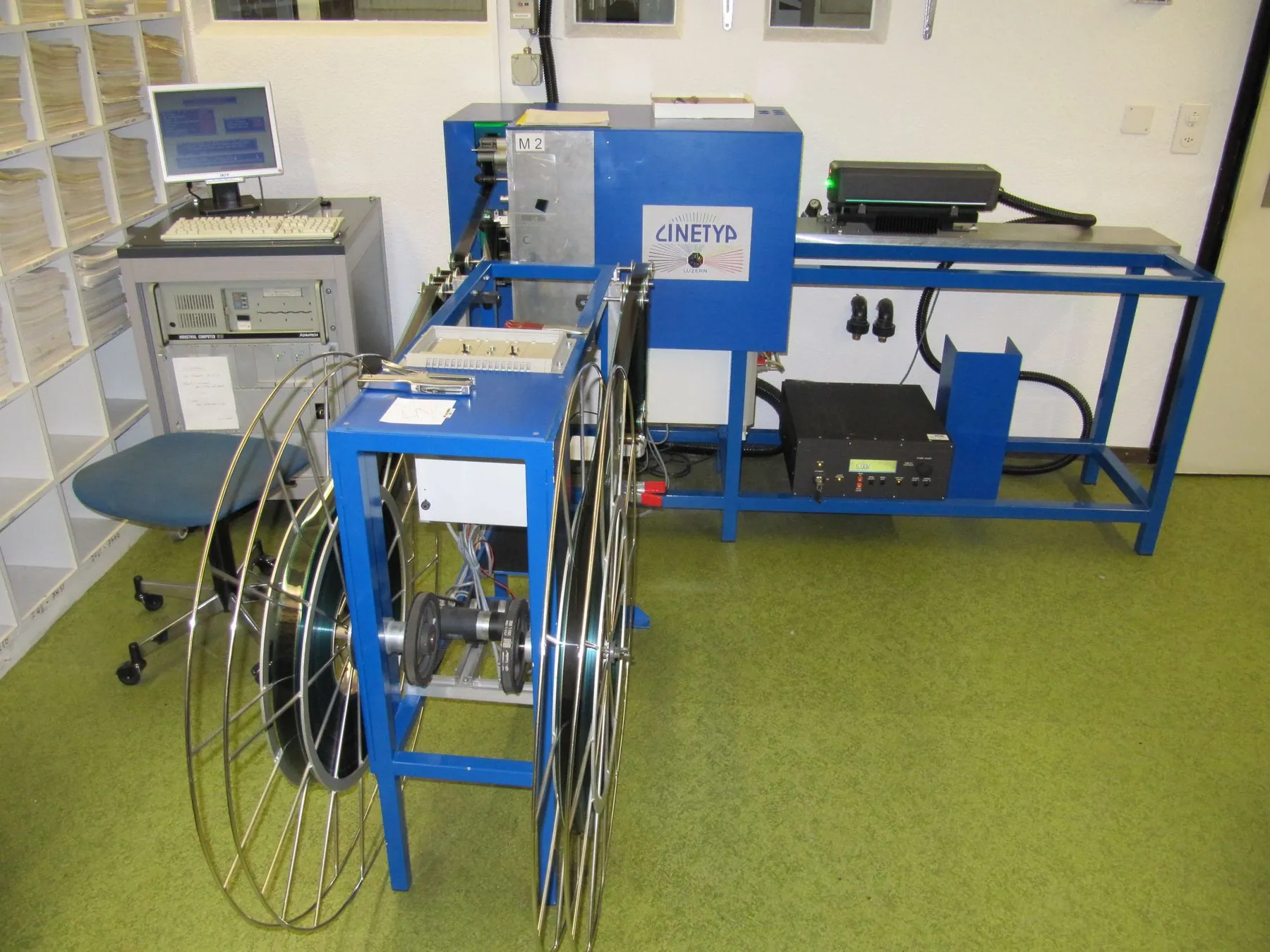
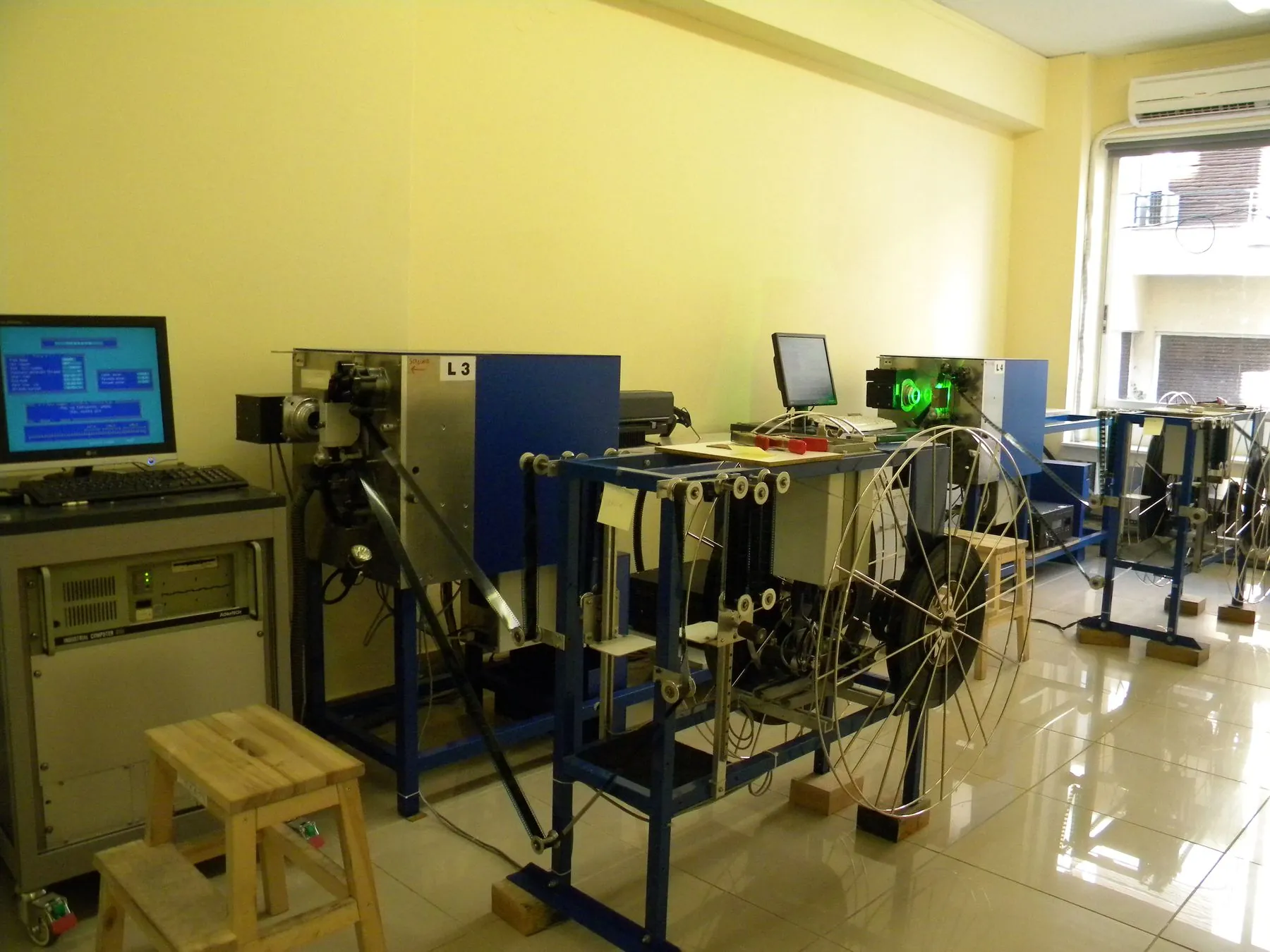
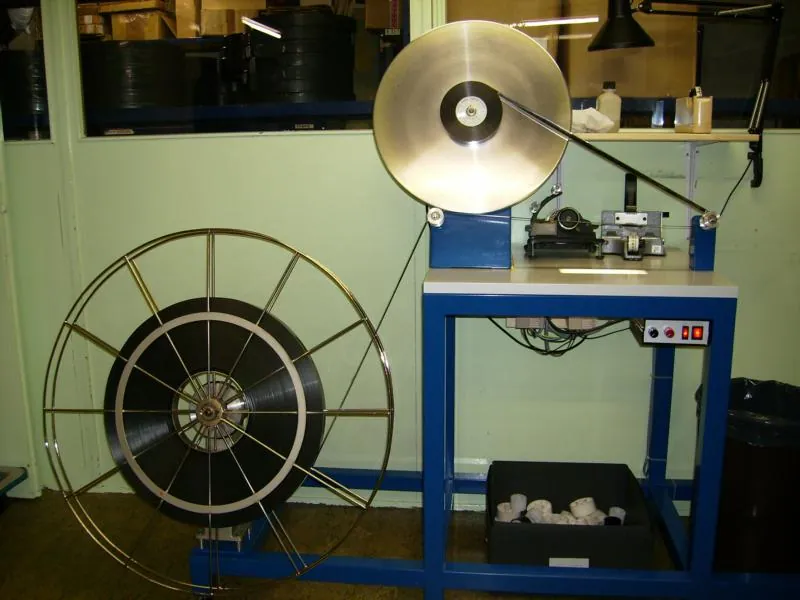
Our subtitling machines were a powerhouse of in-house engineering: optical, mechanical, electrical and software components, operated with a standard PC keyboard and screen. Feed and take-up units could hold a complete feature film.
1/10 mmletter height on the 35mm frame – only the huge magnification in the cinema makes the title readable
Precision and reproducibility are therefore crucial: even the smallest error in a letter or its position would cause shaking, drifting and flickering on the big screen.
The laser at work
Such precision takes time: our machines processed around 150 subtitles per hour. For a feature film with 1,500 subtitles, that is about ten hours per print. The laser burns the emulsion off the base, and precise focusing produces sharp letters. Since light can only be deflected by mirrors, our software controls an X and a Y mirror so precisely that they form letters. Film transport and positioning work like in a cinema projector, using a Maltese cross mechanism.
There were limits, though: in very bright scenes – such as shots in snow – there is hardly any emulsion for the laser to burn away. The subtitle is then only partly readable and can neither be retraced nor recoloured. Only digital projectors with integrated text processors can add a black outline around the letters.
05 – Care
Cleaning & restoration.
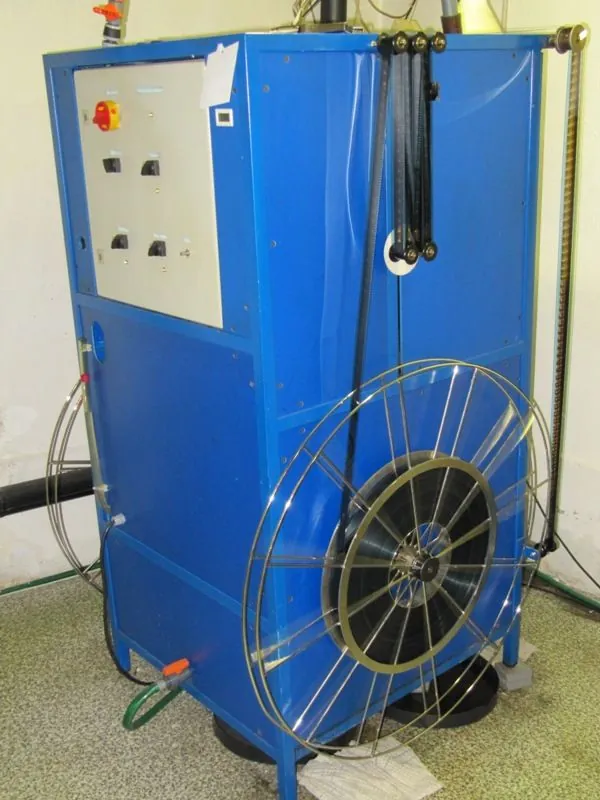
After subtitling, the film is cleaned gently and without mechanical contact using water or steam. For heavily worn material, a washing machine with mechanical contact is also available – used exclusively for aged film stock. This way, we only ever return perfectly clean material to our clients.
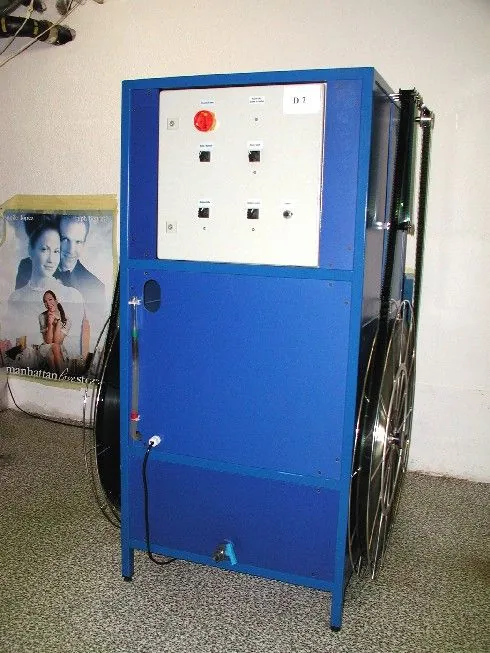
Steam machine for film cleaning
90 %of prints are steam-cleaned – gentle, fast and without solvents
The short exposure to steam has no effect on image quality. Unlike washing, the material is not heated and does not need to be dried. Steaming also protects the thin carbon edge that gives the letters a dark outline and makes them easier to read in bright scenes. No solvents or corrosive liquids are used, and the low water consumption conserves drinking water.
The big advantage: tiny micro-scratches disappear completely because the film swells – ideal for prints that have already been screened in cinemas abroad. Despite generating steam, energy consumption is only about a third of the conventional water process, and steaming is roughly twice as fast.
06 – Goods out
Final inspection.
Before dispatch, the quality of the subtitles is checked. The first print is inspected in full on a light table – translation, spotting and title quality. Only then are the remaining prints subtitled, because errors can no longer be corrected afterwards. The first final inspection is therefore the most important check in the entire process.
If in doubt, critical passages are checked on a converted cinema projector – a 1:1 simulation of the cinema experience.
Title list from 1963
Further prints are spot-checked at high speed: the innermost and outermost reel or trailer of each spool is inspected. If these are fine, the statistical risk of errors in between is very low. The reels are then packed and prepared for dispatch to the cinema.
.webp)